The ultimate guide to marketing your event on Facebook
Whichever types of events you run, this guide is for you. In it, you’ll learn exactly how to promote your events through Facebook, from setting up a high-converting event page to knowing what to post and when, and how to run paid ads. Let’s go.
Share
It’s easy to underestimate just how much Facebook has evolved as a marketing tool over the years. As an event creator, getting to grips with the platform’s latest promotional features, as well as its inner mechanics, can be a very smart move.
With billions of daily users, built-in event discovery, integrated ads, and tools that connect directly to booking, Facebook gives you a way to reach and convert your audience in one place.
Whichever types of events you run, this guide is for you. In it, you’ll learn exactly how to promote your events through Facebook, from setting up a high-converting event page to knowing what to post and when, and how to run paid ads. Let’s go.
Why Facebook is still one of the best ways to promote your event
Facebook has changed a lot over the years, including what it can do for event promotion. Today, the platform works like a connected system, where discovery, engagement, and conversion all feed into each other.
This means that your event doesn’t rely on a single post being seen at the right moment. It can appear through recommendations, shared activity, local discovery, and interactions from people your audience already knows, giving it more chances to be found.
Facebook is also a powerful tool for utilising social proof. When someone marks themselves as “Interested” or engages with your event, that activity can show up to others, helping your event feel active and credible.
All in all, the platform makes the path from discovery to booking much shorter. People can find your event, engage with it, and click through to buy tickets in one journey. Combined with targeted ads, it becomes much easier to turn visibility into bookings.
✅ Key takeaway: Facebook works best when discovery, engagement, and booking support each other. A well-set-up event page, early engagement, and the right mix of organic posts and ads make it easier to reach the right people and drive ticket sales.
How to promote an event on Facebook: Getting started
Before getting into ads and promotion tactics, it’s worth making sure you’ve got a solid foundation in place. Let’s take a look.
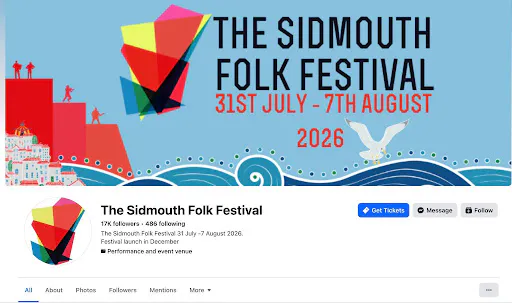
Create a high-converting Facebook Event page
Your event page does most of the heavy lifting because it’s ultimately where people decide whether your event is worth their time. Here’s a quick breakdown of what makes a strong Facebook event page:
A descriptive title
If you have a recognisable event name, or one that’s already descriptive (e.g. Newcastle Food Festival), use this for your event page title.
For events that aren’t as easily recognised, use a short descriptor to make sure the nature and location of your event is explicit. For example, a name like “Summer Vibes Yoga” doesn’t give much away, whereas something more specific like “Summer Vibes: Outdoor Yoga + Brunch in Brighton” tells people exactly what they’re signing up for and makes your event easier to find.
Prominently displayed essentials
Date, time, location, and category all need to be accurate and easy to understand. If anything feels unclear, people tend to move on rather than investigate further.
Plenty of event-specific photos
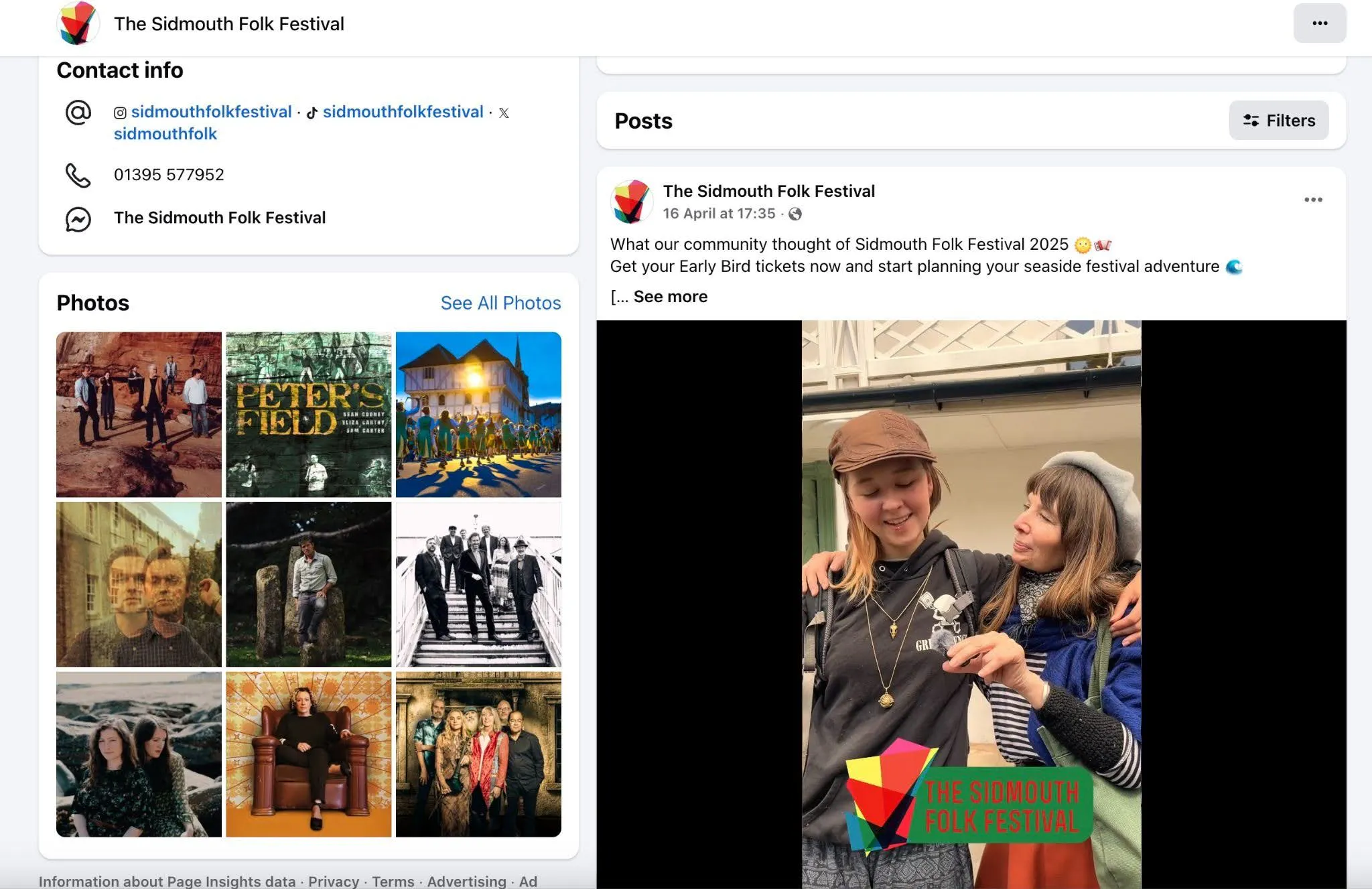
Your Facebook event page includes a preview grid of uploaded photos, which gives people a quick visual impression before they read anything else.
Use that space well. Upload strong, relevant images that show what attending your event actually looks like — previous events, the venue, performers, activities, the atmosphere, or people enjoying the experience.
This is especially important if someone is discovering your event for the first time. A strong set of photos helps build trust and gives people a better idea of what they’re booking.
If it’s a new event and you don’t have past-event photos yet, use high-quality images that reflect the experience as accurately as possible rather than relying on generic stock imagery.
Posts with a strong visual element
Your event page also shows recent posts, so these contribute to the overall impression people get when they visit.
If the page is mostly text updates, it can feel flat or hard to connect with. Posts with strong visuals – photos, posters, short videos, speaker graphics – give your page a much more dynamic feel while helping to reinforce excitement around the event. Someone visiting your page should be able to quickly see that the event is real, current, and worth paying attention to.
Obvious ticket and website link
Finally, add your ticket link. Make it easy to find by including it in the event setup and again in the description. If you’re using Ticket Tailor, this is where you connect interest directly to booking without adding extra steps. If you have a separate website, make sure the link is also clearly displayed so people can quickly navigate to find out more if they want to.
Design an event cover image that stops the scroll
Your cover image has one job: to make someone pause long enough to take in what your event is about.
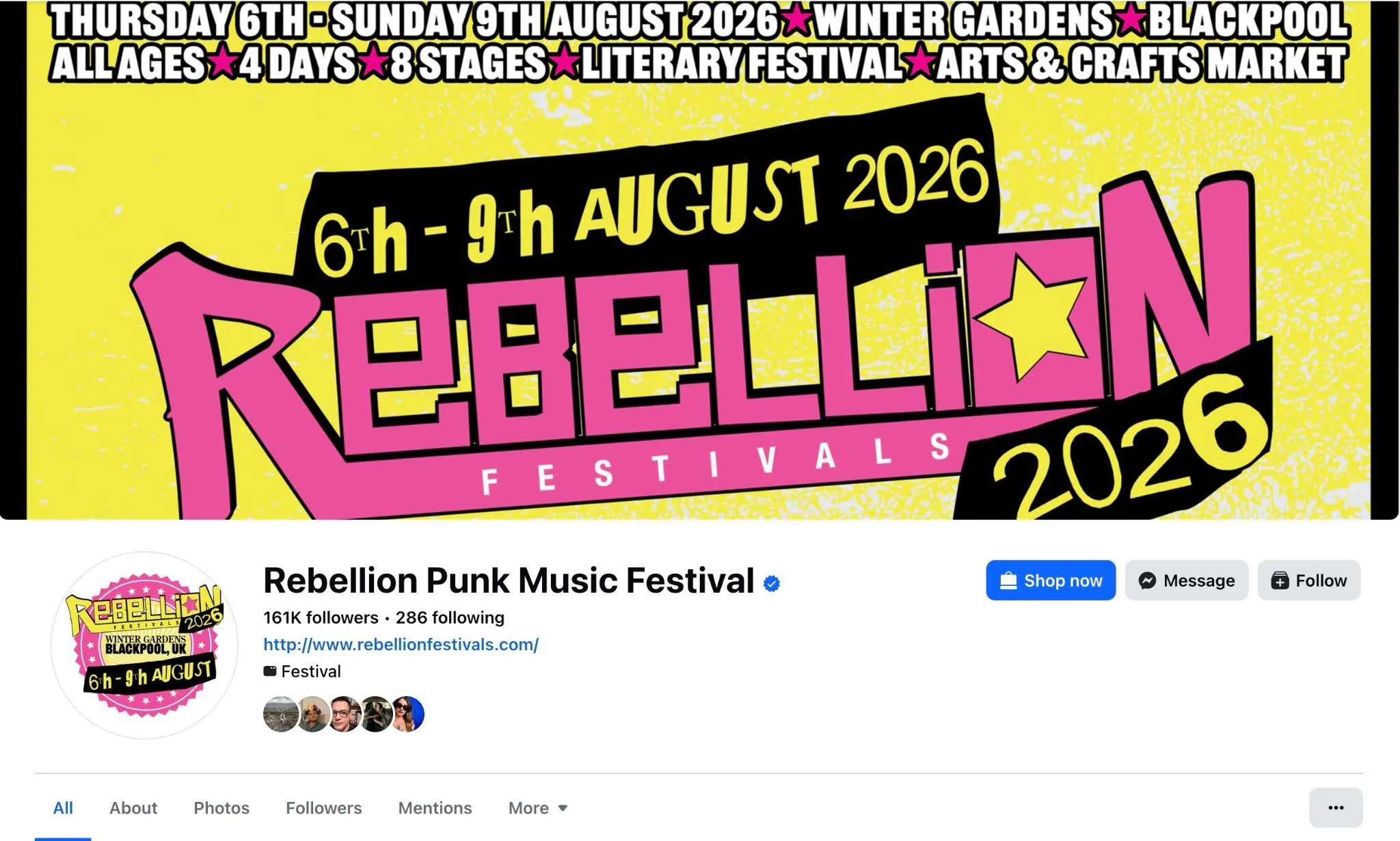
Simple designs tend to perform better than busy layouts. Use bold text, strong contrast, and keep the key information easy to read at a glance.
Focus on what matters most:
What the event is
When it’s happening
Why it’s worth paying attention to
If someone has to zoom in or work to understand it, you’ll lose them.
It’s also worth checking how your image appears on mobile. Facebook crops images in ways that can cut off important details, so it’s better to test it before you rely on it.
Set up your event for maximum visibility
A few small settings can have a real impact on how far your event travels. Start by making sure your event is public. Private events don’t appear in search or recommendations, which limits your reach from the beginning.
If you’re working with collaborators, add them as co-hosts.
This allows your event to be seen by their audience as well as your own, which can significantly expand your reach without additional effort. It also helps build trust, as people are more likely to engage with events that include names they recognise.
It’s also worth thinking about early engagement. When people respond to your event or interact with posts soon after it goes live, Facebook is more likely to show it to a wider audience. That initial activity doesn’t need to be complicated. A small group of engaged people can make a difference.
✅ Key takeaway: Before you focus on promotion, make sure your event page is doing its job. A strong title, clear description, easy-to-find ticket link, and the right visibility settings make it much easier for people to understand your event, trust it, and take action quickly.
Best ways to promote an event on Facebook (quick wins)
If you don’t have time to build out a full strategy yet, start with these relatively simple best practices to get the wheels in motion.
Invite your existing audience
Start by inviting people who already have a reason to care about your event. That might include past attendees, your email list, regular customers, or people who have engaged with your previous events. These are the people most likely to respond early, which helps your event gain initial visibility.
It’s worth doing this in smaller batches rather than all at once. Early responses and interactions can help your event appear more often in feeds and recommendations, so spacing invites slightly can give you more consistent activity.
Think of this as the starting point for your promotion. A small group of engaged people can make a noticeable difference in how your event performs in the first few days.
Use co-hosts to expand your reach
If you’re working with a venue, performer, sponsor, or collaborator, add them as a co-host.
It’s one of the simplest ways to get your event in front of more people without extra effort, since the event becomes visible to their audience as well as your own.
It also adds a layer of credibility. Seeing familiar names attached to an event makes it feel more established straight away.
Post early, not just when tickets are on sale
A lot of event pages stay quiet until tickets go live, which means they miss out on early engagement.
Start posting as soon as your event is live, even if you’re still building momentum. A quick introduction, a behind-the-scenes update, or a short video explaining what you’re planning is enough to get things moving.
It doesn’t need to be polished; you just need to give people something to engage with so your event starts appearing in feeds.
Pin your event to your page
If someone visits your Facebook page, make it easy for them to find your event.
Pinning your event keeps it at the top of your page, so it’s one of the first things people see. This small step is a great way to remove friction when it comes to people navigating their way to your event and ultimately tickets.
Use video, even if it’s simple
Don’t be tempted to skip video in your Facebook marketing strategy. Short-form video is one of the most engaging content types to use across social media, and it also gives people a sense of what they’re signing up for, helping to turn interest into a booking.
A short clip filmed on your phone can go a long way, whether that’s a quick walkthrough of the venue, a bit of context about what you’re planning, or footage from a past event.
✅ Key takeaway: Early promotion works best when it creates activity. Inviting the right people, posting from the start, and giving people something to engage with helps your event gain momentum before you spend money on ads or larger campaigns.
Your Facebook event promotion strategy (from launch to sell-out)
Once the basics are in place, it’s time to think about how you’ll build up your promotion in the run-up to your event.
It’s best to focus on steadily increasing awareness and engagement in the weeks or months before your event (depending on its scale), which means planning out specific phases, each with its own goal.
Phase 1: Pre-launch (build anticipation)
Before your event is fully announced – and as you move through ticket tiers if you’re doing a gradual release – you have a chance to build anticipation around your event. There are lots of fun and simple ways to do this; a short teaser, a hint about what’s coming, or a quick post letting people know something is in the works can be enough to get attention.
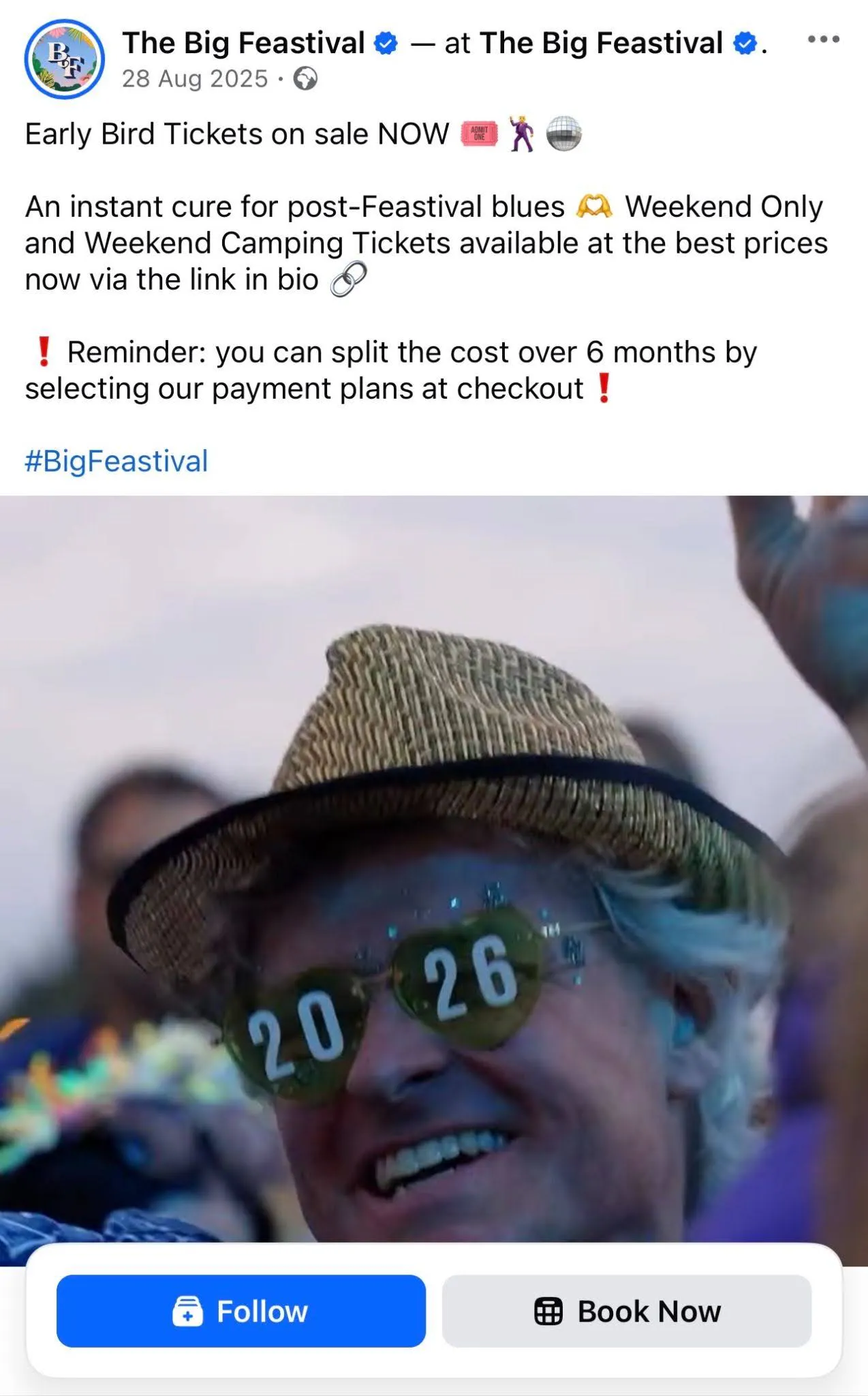
If your tickets to next year’s event will be released shortly after this year’s, posting lots during your current event can also act as great teaser content.
If you already have an audience, this is a good time to warm them up. Share early details, talk about what you’re planning, and give people a reason to look out for your launch.
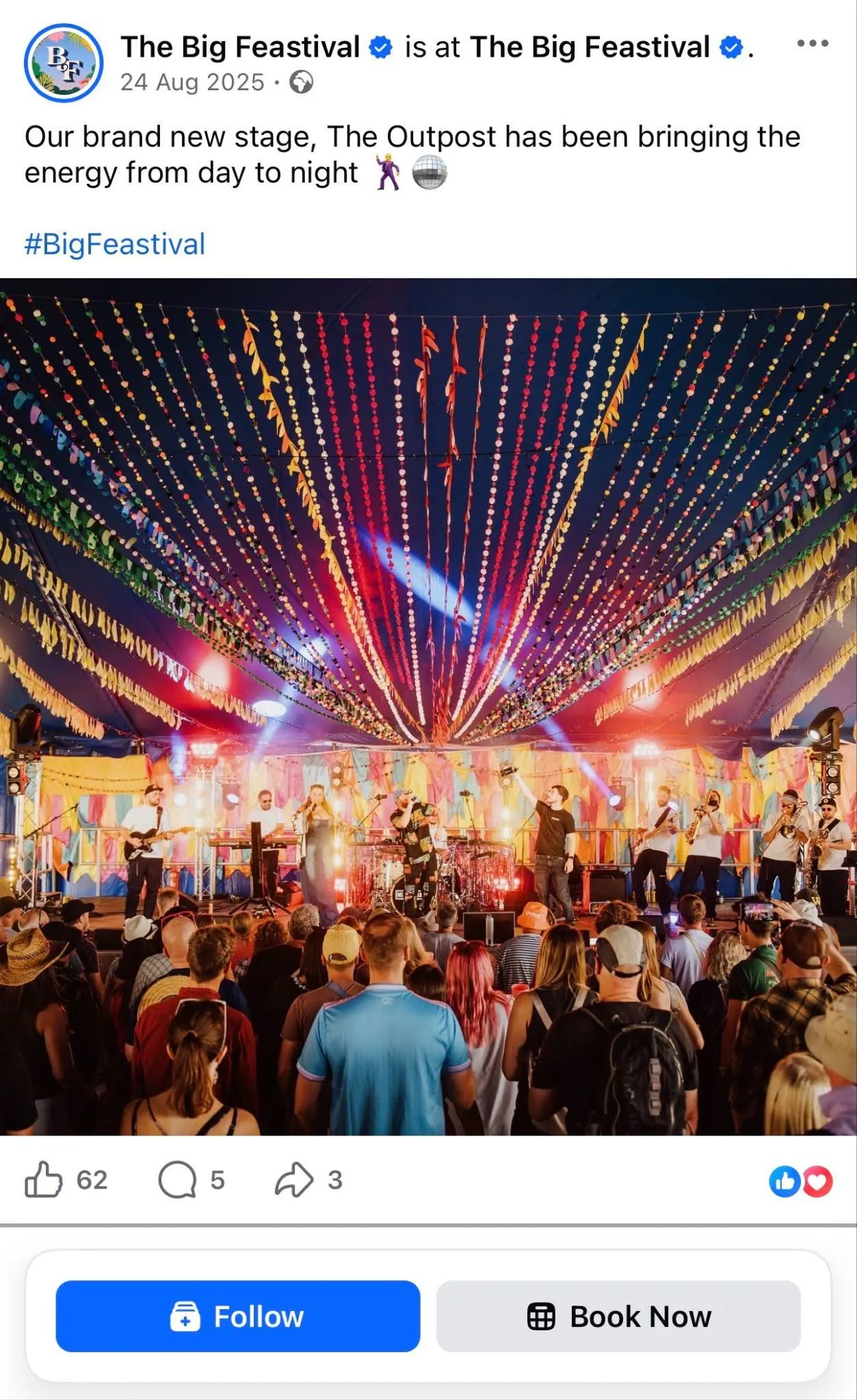
The Big Feastival pushes out regular content and reminders year-round, from one festival to the next.
Phase 2: Launch your event properly
This is the point where your event is publicly announced, usually when your event page is live and tickets are available, or about to go live.
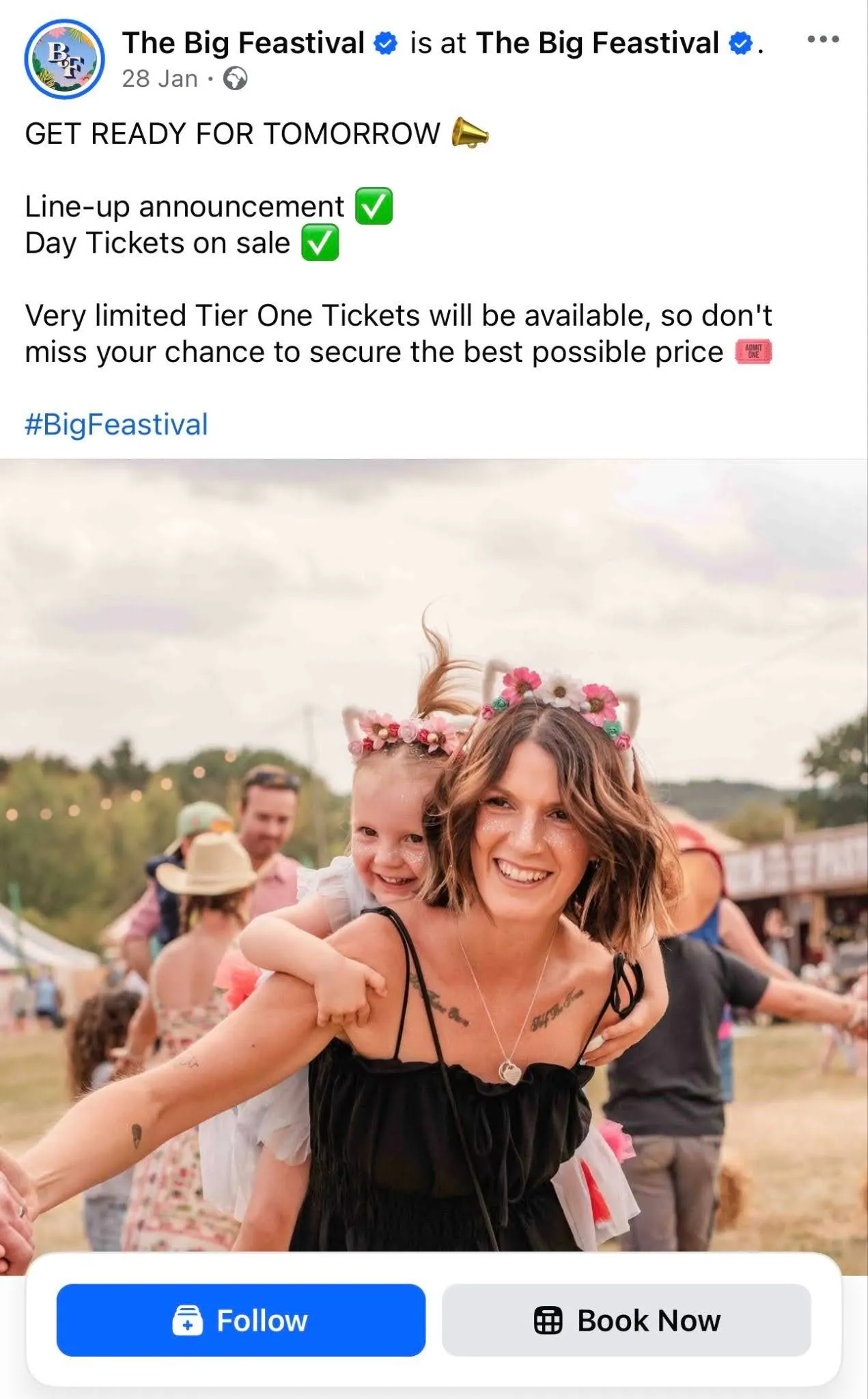
Focus on the hook and imbue your launch posts with a sense of excitement and anticipation. Communicate exactly which types of tickets are going on sale and be sure to highlight if lower cost first tier tickets are limited.
Once your event is live, aim to drive some early activity. Ask collaborators, speakers, partners, or anyone involved to engage with the event straight away. A few people marking themselves as “Interested”, commenting, or sharing is enough to get things moving.
This type of early engagement increases the chances of your event appearing in feeds and recommendations over the next couple of days, which helps you build momentum from the start.
Persuasive copy plus a highly atmospheric video makes sure the first ticket drop lands with a punch.
Phase 3: Keep momentum going
After the launch, focus on staying visible without repeating the same message.
Share different angles of your event over time. That might include a short video, a speaker or performer highlight, a testimonial, or a behind-the-scenes update. Each post should add something new rather than restating the same information.
Space your posts so there’s a steady flow of activity. You don’t need to post every day, but regular updates give people multiple chances to notice your event and engage with it.
Consistent visibility keeps your event in circulation and increases the likelihood that people act when they’re ready.
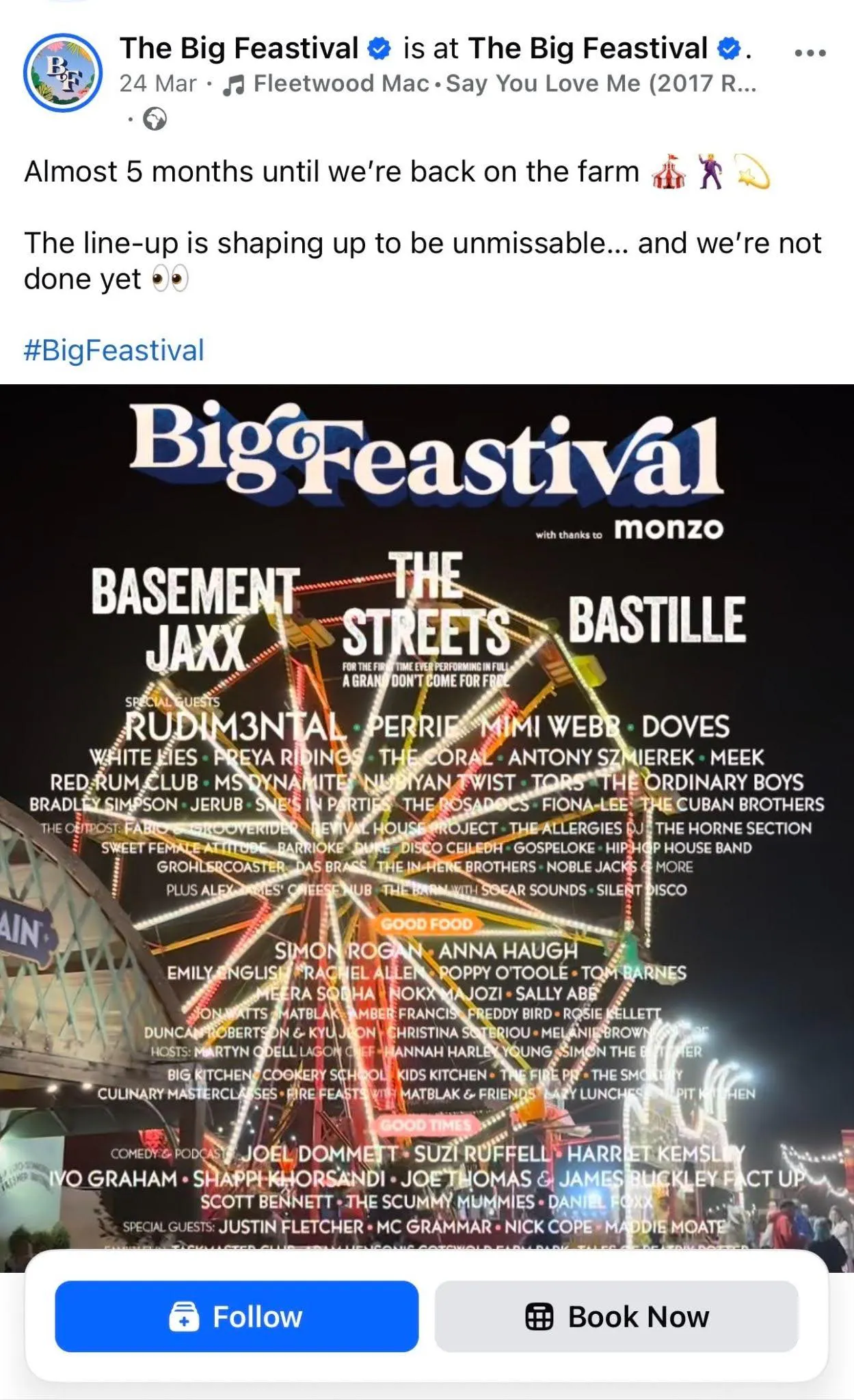
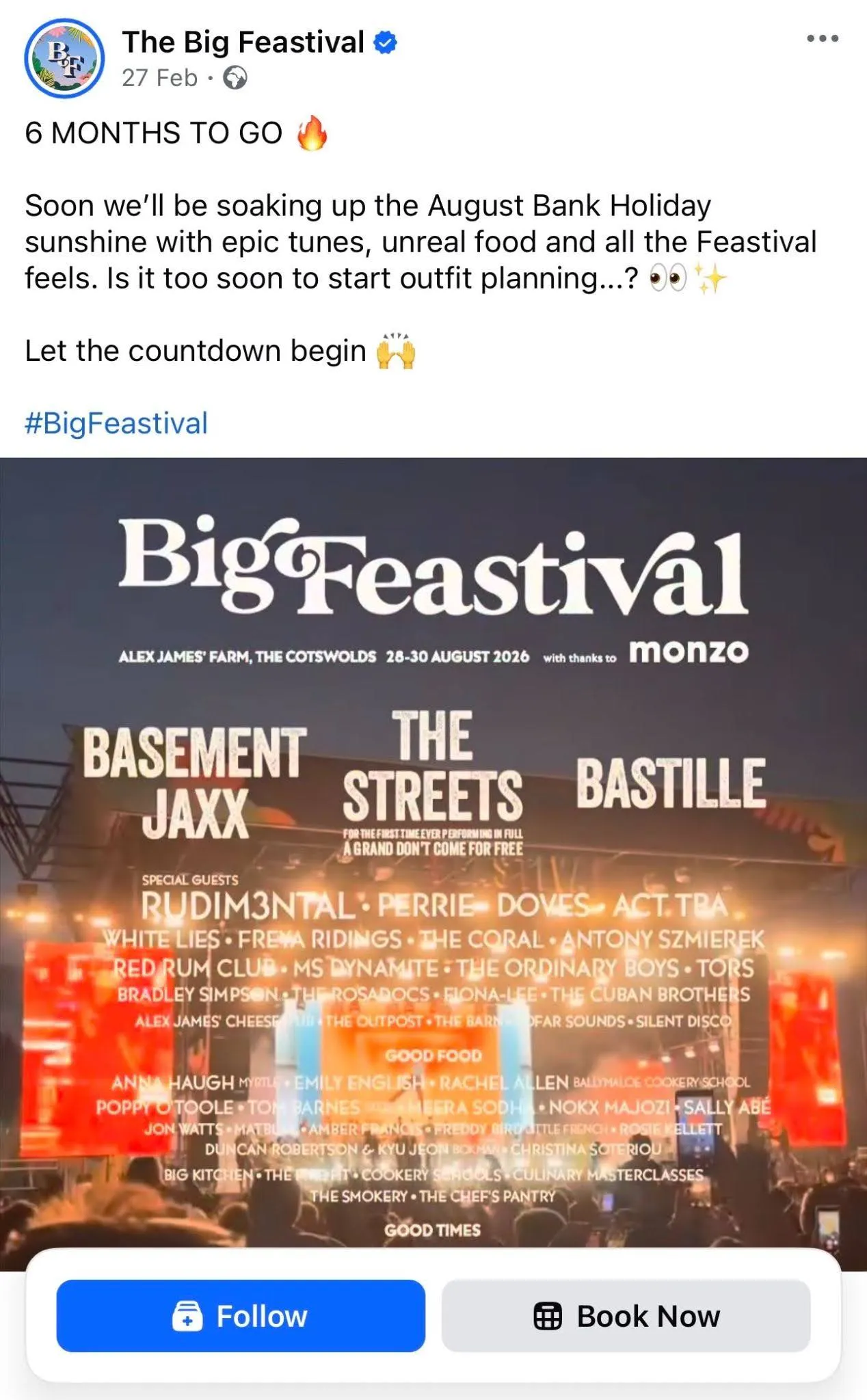
Regular reminders of the festival’s line-up, plus a fun countdown element, help keep the buzz going in the run up to the event.
Phase 4: Last-minute promotion that converts
As your event gets closer, shift your focus to getting people to commit.
Make timing explicit in your posts. If tickets are limited, mention how many are left. If there’s a deadline, include it. If the event won’t be repeated, say so.
Re-engage people who’ve already shown interest. Anyone who has clicked through, interacted with your posts, or marked themselves as “Interested” is already familiar with your event, so reminders can be effective at this stage.
Keep your messaging direct. At this point, people don’t need more information, they need a reason to book now.
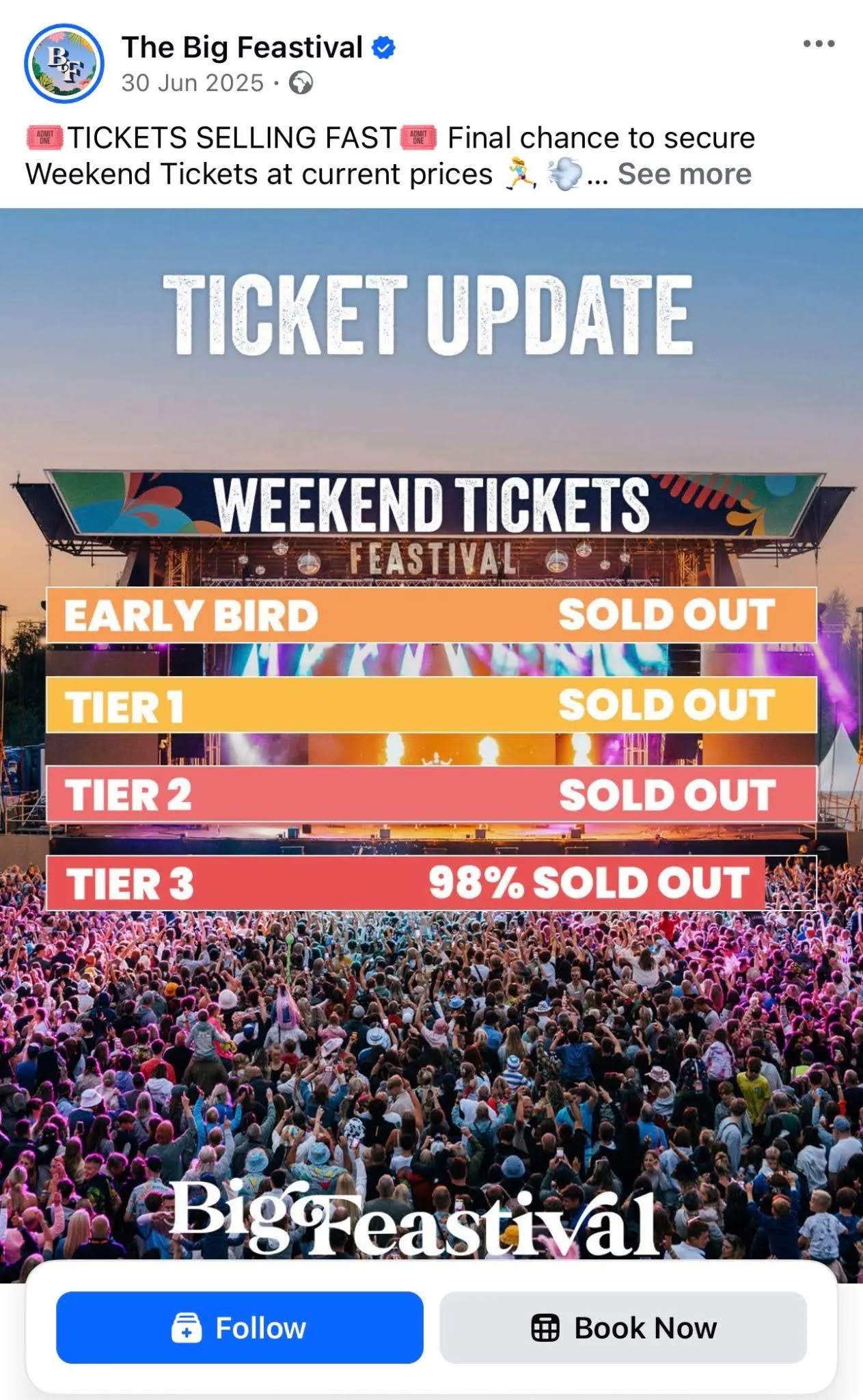
Urgent messaging and explicit reminder of dwindling tickets creates a feeling of scarcity and ‘must-act-now’.
✅ Key takeaway: Strong event promotion builds in stages. Creating anticipation early, launching with energy, staying visible, and using urgency closer to the event gives people multiple chances to notice your event and book at the right time.
Best organic Facebook event marketing tactics
Once your core promotion is in motion, the below organic tactics can help you extend your reach (we cover the use of paid ads in the next section).
Post content that attracts engagement
If every post is focused on selling tickets, you might find that people switch off quickly.
Think about what would make someone pause and engage, even if they weren’t planning to buy straight away.
That could be a short story about how the event came together, a testimonial from someone who attended last time, or an atmospheric shot of a previous event.
Posts like this give your audience a reason to interact, which in turn means your event is more likely to show up in their feed.
Use Facebook Groups (without being spammy)
Facebook Groups can be a strong source of traffic. Start by finding groups that are genuinely relevant to your event. That might be local community groups, interest-based groups, or professional networks depending on what you’re running.
When you post, focus on adding value rather than just promoting.
Instead of dropping a link with no context, introduce your event in a way that feels relevant to the group. Explain why it might be of interest and give people a reason to engage.
Collaborate with partners, co-hosts, and influencers
If you’re working with partners, speakers, performers, or local businesses, involve them in your promotion. Ask them to share the event, create their own posts, or invite their audience.
This expands your reach in a way that feels more natural than paid promotion, and it helps your event reach people who may not have come across it otherwise.
Turn attendees into promoters
People are more likely to pay attention to events recommended by someone they know.
You can encourage this by making it easy for attendees to share your event. That might mean reminding them to invite friends, offering a small incentive, or simply giving them something worth sharing.
Even a small number of people spreading the word can have a ripple effect, especially for local or community-based events.
✅ Key takeaway: Organic promotion works best when people have a reason to engage, not just buy. Content that feels useful, interesting, or shareable helps your event reach more people naturally and keeps momentum going between bigger promotional pushes.
Facebook Ads for event promotion: how to set up campaigns that drive bookings
Organic reach can take you a long way, but there’s a limit to how many people you can reach without putting some budget behind it.
Facebook Ads give you a way to get your event in front of the right people, especially if you’re working with a tight timeline or trying to reach beyond your existing audience.
Good news: a simple, focused approach is enough to get started.
When should you use Facebook Ads?
Not every event needs paid promotion. If you already have a strong audience and your events tend to fill up through word of mouth, organic reach might be enough. But if you’re trying to grow, reach a new audience, or sell a higher number of tickets, ads can drive results much more quickly.
They’re particularly useful if:
Your event has a fixed date and you’re working towards a deadline
You want to reach people outside your immediate network
You need to boost visibility quickly after launch
How to promote your event using Facebook Ads Manager (beginner-friendly)
If you’re brand new to Facebook ads, it’s best to start with a simple campaign. Ads Manager can feel a bit overwhelming at first, but you don’t need to use every feature.
Choose an objective that matches your goal. If you want people to buy tickets, a traffic or conversions campaign makes sense. If your priority is awareness, engagement can work as a starting point.
From there, set a budget and timeframe. Even a modest daily budget can help you reach a steady stream of potential attendees.
Keep your setup focused. One audience, one or two ads, and a focused message is enough to begin with. You can always refine things once you start seeing results.
Targeting the right audience
Targeting controls where your budget goes, so getting it right means your ads are shown to people who are more likely to attend rather than being wasted on the wrong audience. You can target audiences based on a range of factors like their location and interests.
For in-person events, limit your audience to people within a realistic travel distance. This keeps your budget focused on people who can actually attend.
Use interests or behaviours that align with your event. For example, a yoga workshop might target people interested in yoga, wellness, or fitness. A networking event might focus on specific industries or job roles.
You can also retarget your ads, which just means targeting people who’ve already visited your ticket page, engaged with your posts, or responded to your event. These users are already familiar with what you’re offering so showing ads to them can bring them back at the point where they’re more likely to book.
[Screengrab of Facebook ads manager?]
What makes a high-performing event ad
The creative you use in your ad determines whether someone stops scrolling or ignores it.
You’re competing for attention in a crowded feed, and people make a decision in a matter of seconds. If your ad doesn’t quickly show what the event is and why it’s worth their time, it won’t get a second look.
Well-defined objective
Before putting an ad together, decide what you want it to achieve.
If your goal is awareness, focus on reach and engagement. If you want people to consider attending, send them to your event website. If you’re aiming for ticket sales, direct them straight to booking.
The structure of your ad should match that goal. Mixing objectives often leads to weaker results because the message becomes less focused.
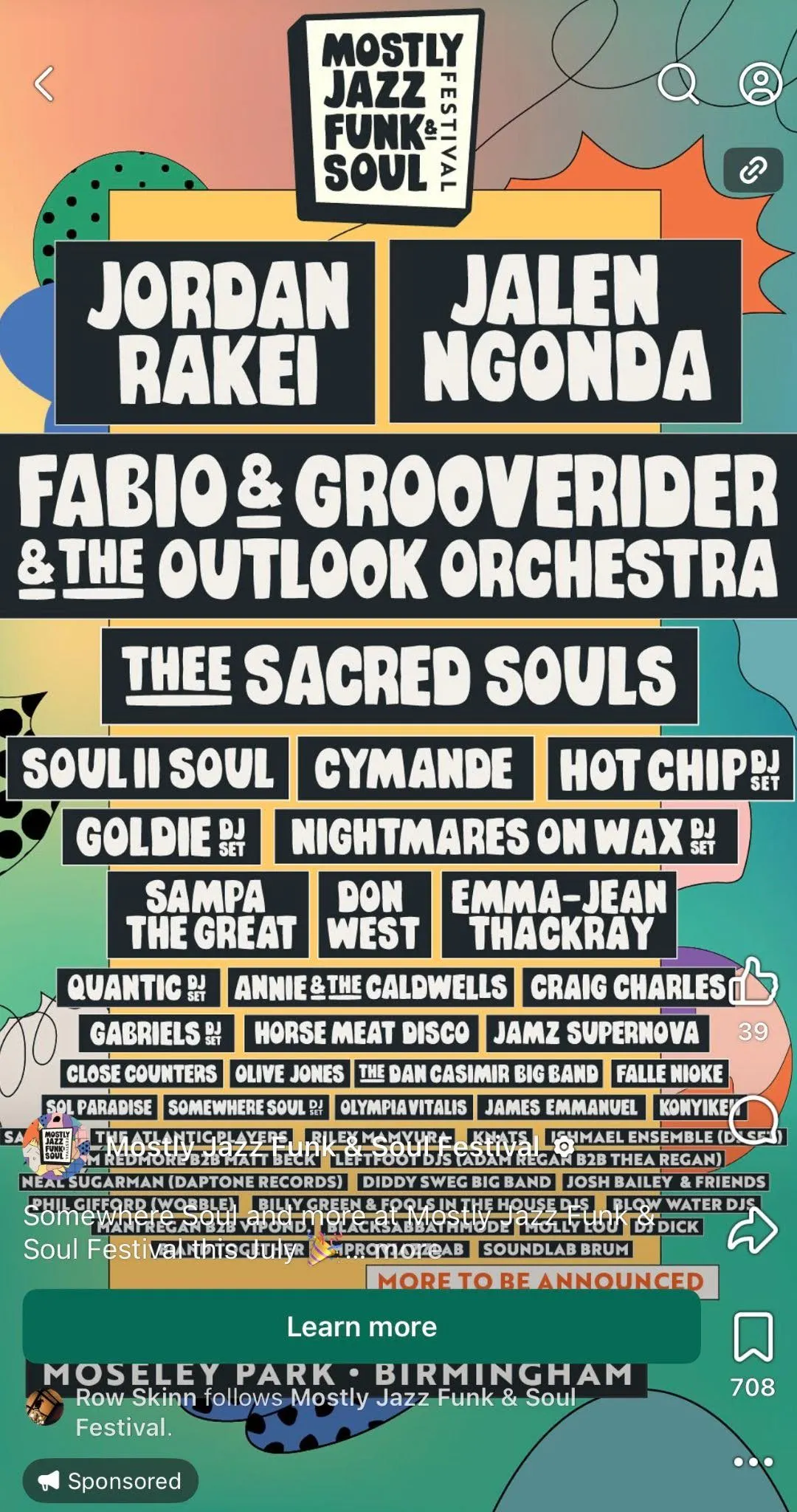
This awareness campaign by Mostly Jazz Funk & Soul Festival directs people to their website to “Learn more” rather than straight to “Book tickets”.
Strong visuals that reflect the event
Your visual needs to stand out in a busy feed and quickly signal what your event is about.
For static ads, bold colors, prominent typography, and simple layouts will likely perform better than cluttered designs. The key details should be easy to read at a glance, even on mobile.
Where possible, use imagery that relates directly to the event. A strong visual should catch attention first, then give enough context for someone to decide whether to engage.
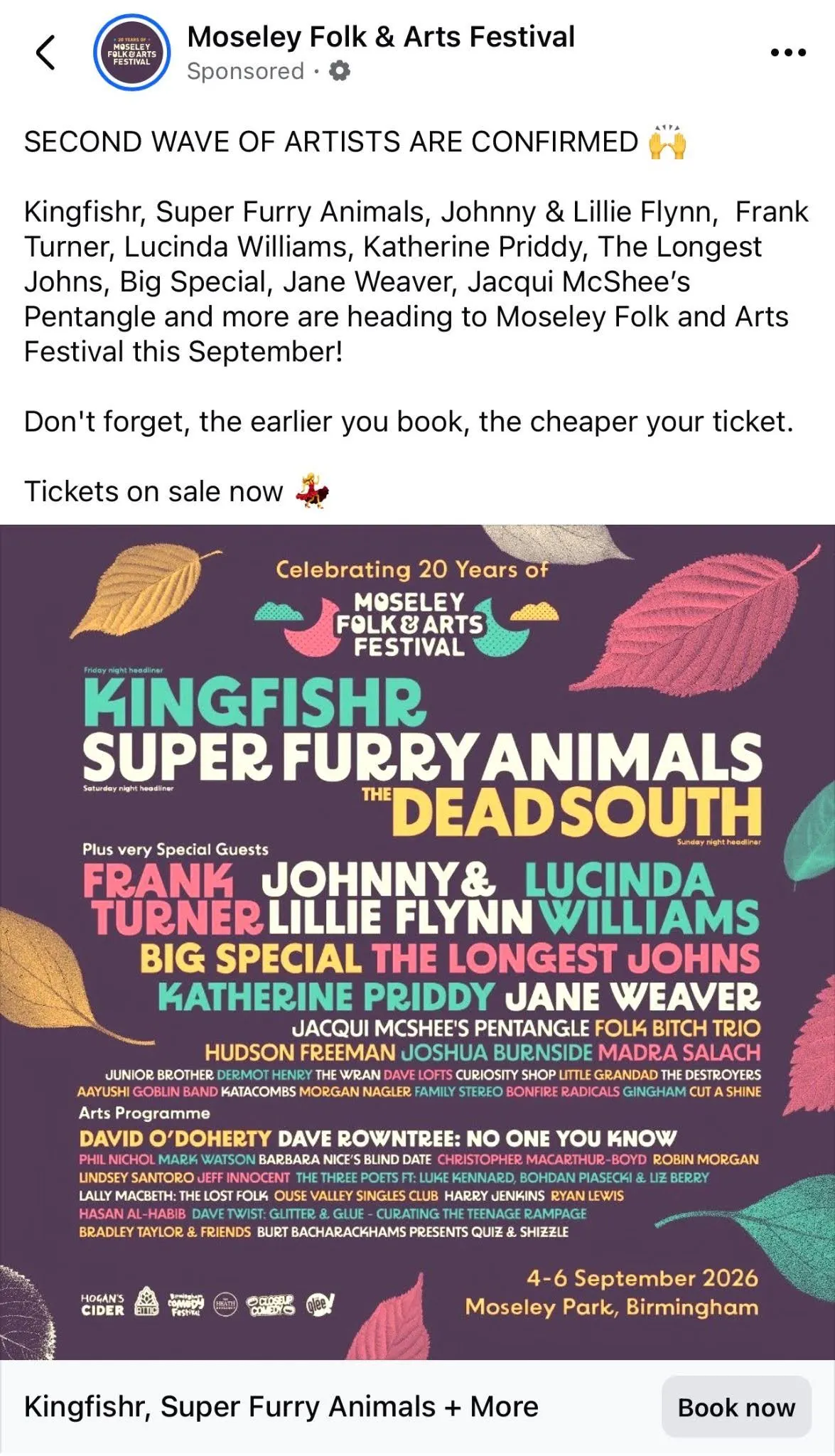
The Mosely Folk & Arts Festival uses bold typeface and branded colors to catch scrollers’ attention.
Show the atmosphere of the event
Ads perform better when people can picture themselves there.
Footage or imagery that shows the event in action shows people what to expect. That might be people interacting, the setup of the space, or moments from a previous event.
The more immersive the content feels, the easier it is for someone to connect with it and decide whether it’s something they want to be part of.
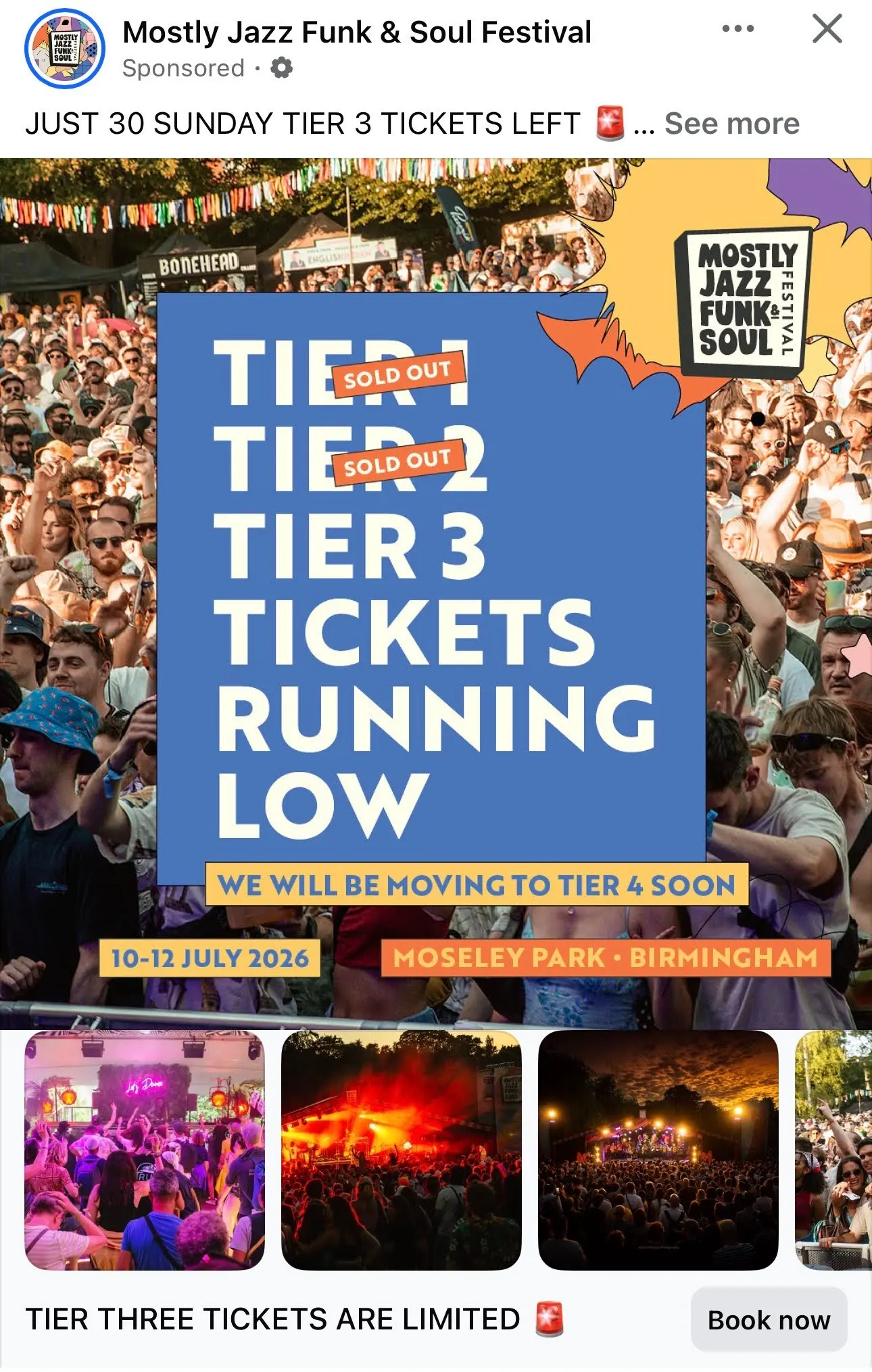
The Mostly Jazz Funk & Soul Festival pairs evocative imagery that showcases the festival’s atmosphere with scarcity messaging.
Copy that gets to the point quickly
People decide quickly whether an ad is worth paying attention to, so your copy needs to explain the event fast. Don’t get caught up in long-winded descriptions; stick to the facts and keep your wording as concise as possible.
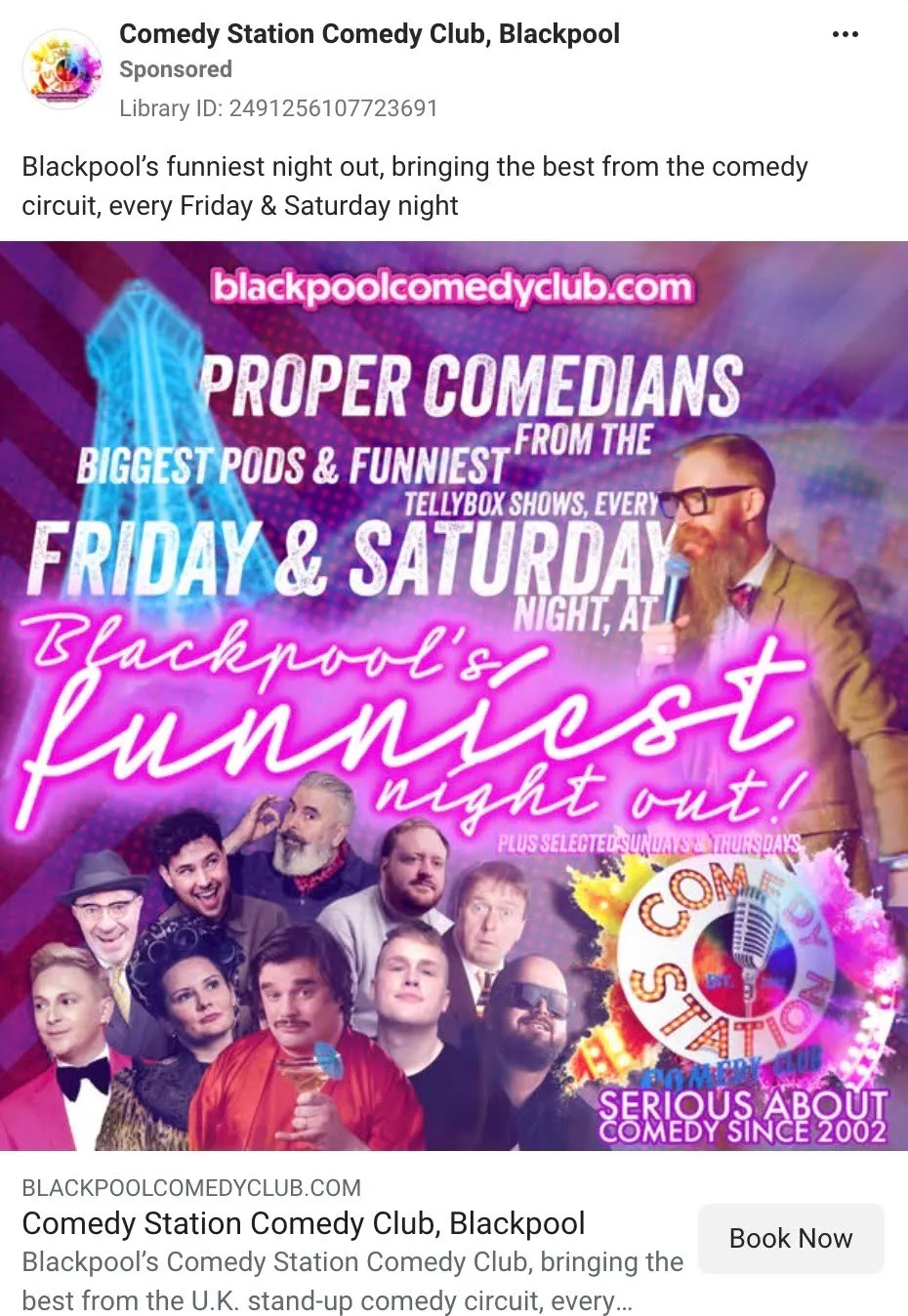
Blackpool Comedy Club cuts to the chase with concise, persuasive copy that tells you all you need to know about their events.
An obvious next step
Every ad should make the next action obvious.
If the goal is ticket sales, direct people to book. If you want them to learn more first, send them to the event page. When the message and the action are aligned, people are more likely to follow through.
Avoid leaving the next step open-ended. An explicit direction reduces hesitation.
✅ Key takeaway: Paid ads work best when strong targeting, focused creative, and a clear next step make are in place. Together, these elements make it much easier to turn attention into action and avoid wasting budget on the wrong audience.
Impactful Facebook event promotion ideas to try
If you’re looking for ways to keep your promotion fresh, these ideas can help you show up in different ways without repeating yourself.
Countdown posts: Mark the days leading up to your event, especially in the final week. This keeps your event visible and reinforces the idea that time is running out.
Speaker or performer spotlights: If your event includes speakers, artists, or hosts, give each one a moment. Share a short intro, what they’ll be doing, and why people should be excited.
Behind-the-scenes previews: Show what’s happening in the lead-up. That could be setting up the space, preparing materials, or planning the schedule.
Giveaways or competitions: Offering a free ticket or small prize can help increase engagement and reach, especially if entering involves liking, commenting, or sharing.
Live Q&As or short videos: A quick live session or recorded video answering common questions can help remove hesitation and build trust.
User-generated content: If you’ve run similar events before, share photos, videos, or feedback from attendees. This gives people a useful picture of what to expect.
How to promote different types of events on Facebook
The basics stay the same, but a few adjustments can make your promotion more effective depending on the type of event you’re running.
Charity events
With charity events, the cause is central.
Make it obvious what the event supports and why it matters. People are more likely to engage and share when they understand the impact.
Highlighting stories, beneficiaries, or outcomes adds depth and gives people a reason to get involved.
Workshops and classes
For workshops, people are looking for clarity and reassurance.
Focus on what they’ll learn, who it’s suitable for, and what level of experience is expected. Address common questions upfront, such as what’s included or what they need to bring.
This helps reduce hesitation and makes it easier for someone to commit.
Festivals, conferences and large-scale events
For larger events, the overall experience is the main draw.
Use your content to build a picture over time. That might include line-up announcements, previews of different areas, or highlights from previous years.
Breaking the event into smaller moments makes it easier for people to understand what they’re getting and gives you more to promote.
Local community events
For smaller, local events, relevance matters more than scale.
Keep your messaging grounded in the local area. Mention the location, reference the community, and make it easy for people to see how it fits into their plans.
Posting in local groups and encouraging word-of-mouth are likely to be your biggest drivers of ticket sales.
Theme parks and seasonal attractions
For theme parks and seasonal events, timing and repeat visibility are key.
People often plan these visits in advance, so your promotion needs to stay visible over a longer period. Focus on what’s new, limited, or seasonal to give people a reason to visit now rather than later.
Visuals play a big role. Show the experience in action, whether that’s rides, decorations, or key moments visitors can expect. The more you bring the atmosphere alive on-screen, the easier it is for people to picture a visit and make plans.
Facebook Live events
For live events, timing and reminders are key.
Build anticipation in the lead-up by sharing what you’ll cover and when it’s happening. As the time gets closer, increase the frequency of reminders so people don’t miss it.
Make sure people can see what they’ll gain from attending live rather than watching later.
Promoting your Facebook event on Instagram
If you’re active on Instagram, it’s worth linking your promotion across both platforms.
Share your event in posts, stories, and reels, and direct people back to your Facebook event page or ticket link. Even a simple mention can help bring in additional traffic.
You can also repurpose content between platforms. A short video or post created for Facebook can often work just as well on Instagram with minimal changes.
Promoting a Facebook event: a simple checklist
If you want a quick way to sense-check your approach, this covers the essentials:
Create a focused, detailed event page
Add a strong cover image
Invite your existing audience
Post regularly in the lead-up
Use collaborators to expand your reach
Consider ads if you need to reach more people
How to track your Facebook event marketing performance
Once your promotion is underway, it’s a wise move to keep an eye on what’s working.
Key metrics that matter
A few key signals can tell you whether your promotion is on the right track:
How many people are responding as “Interested” or “Going”
How many people are clicking through to your ticket page
How many of those clicks turn into bookings
Tools to measure success
Facebook gives you a baseline through its own insights, including engagement and reach.
You can go a step further by using tracking links, which help you see where your traffic is coming from.
If you’re using Ticket Tailor, your dashboard gives you an easy-to-digest view of ticket sales and performance, so you can connect your promotion directly to results.
✅ Key takeaway: Tracking a few meaningful metrics gives you a clearer picture of what’s working. Engagement, clicks, and bookings tell you far more than reach alone, and they make future promotion decisions much easier.
Where can you go from here?
When it comes to running a successful Facebook marketing strategy, each event gives you a chance to learn what works. Pay attention to which posts get engagement, which channels bring in bookings, and what your audience responds to. Over time, you’ll start to see patterns and promotion will become easier. Instead of starting from scratch each time, you’ll find you’re able to build on what you already know works for your events.
Having the right tools in place makes promoting your events across social media so much easier. With Ticket Tailor, you can track where your bookings are coming from, connect your Facebook ads using tracking pixels, and see what’s really driving sales. Industry-beating low fees also mean you keep more of your revenue, which gives you more flexibility to reinvest in promotion and test what works for your audience.